
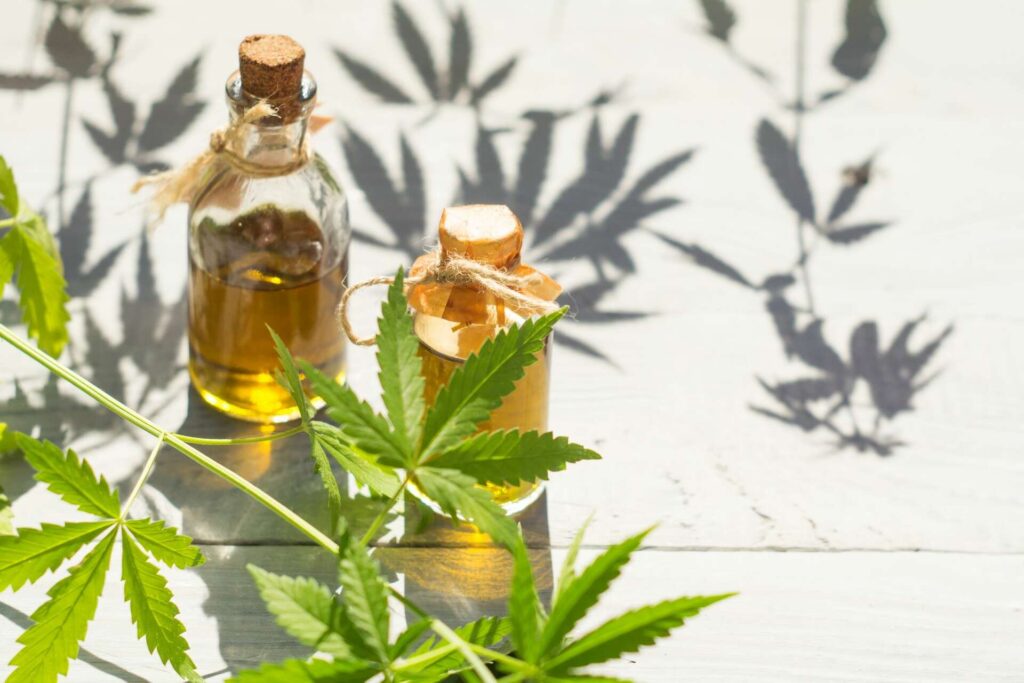
When people shop for CBD oil, they often focus on the cannabidiol concentration, whether the product is full-spectrum or broad-spectrum, and how much CBD it contains. However, there is another ingredient that deserves attention: the carrier oil.
CBD is naturally fat-soluble, which means it is commonly combined with a plant-based oil to create a usable CBD tincture or oil product. The carrier oil affects the product’s texture, flavor, shelf life, and overall formulation.
Two of the most commonly discussed options are MCT oil and hemp seed oil, but they are not the only carrier oils used in CBD products. Olive oil, avocado oil, sunflower oil, and other oils may also be used depending on the manufacturer’s formulation.
Understanding the differences between these oils can help consumers read CBD labels more confidently and choose products that fit their preferences.
What Is a Carrier Oil in CBD Products?
A carrier oil is a base oil used to dilute and carry CBD extract.
CBD extract on its own is highly concentrated and is not typically consumed in the same way as a finished CBD oil. A carrier oil helps turn the extract into a more manageable formulation.
Carrier oils can influence several characteristics of a CBD product, including:
- Texture and consistency
- Flavor
- Aroma
- Stability
- Shelf life
- Ease of measuring the product
- Overall formulation
The carrier oil does not change CBD into a different cannabinoid. Instead, it serves as the base in which the CBD extract is formulated.
Why Is CBD Mixed With a Carrier Oil?
CBD is a fat-soluble compound. Adding it to an oil-based formulation allows manufacturers to create a consistent liquid product that can be measured and used according to the product’s directions.
A carrier oil can also make it easier to distribute a concentrated CBD extract throughout the bottle.
For example, instead of having a very concentrated extract that is difficult to measure consistently, a manufacturer can formulate it into a liquid oil containing a specified amount of CBD per serving or per milliliter.
This is one reason you will frequently see ingredients such as MCT oil, hemp seed oil, or olive oil listed on CBD product labels.
MCT Oil in CBD Products
MCT oil, or medium-chain triglyceride oil, is one of the most common carrier oils found in CBD tinctures.
MCTs are fats consisting primarily of medium-chain fatty acids. Commercial MCT oil is commonly derived from coconut or palm sources, although the exact source depends on the manufacturer.
MCT oil is popular in CBD formulations because it is generally:
- Light in texture
- Relatively neutral in flavor
- Easy to blend into liquid CBD formulations
- Convenient for products where manufacturers want a mild-tasting carrier
Because MCT oil has a relatively neutral taste, it can be particularly useful when the manufacturer wants the CBD product to have less noticeable flavor from the carrier itself.
Is MCT Oil the Same as Coconut Oil?
Not exactly.
Coconut oil contains a mixture of different fatty acids, while MCT oil is formulated to contain a higher proportion of medium-chain triglycerides.
Although MCT oil can be derived from coconut oil, the two should not automatically be treated as identical ingredients.
If you are checking a CBD label, look for the exact ingredient listed rather than assuming that “MCT oil” and “coconut oil” mean the same thing.
Hemp Seed Oil in CBD Products
Hemp seed oil is another carrier oil used in some CBD products.
It is made from hemp seeds and is different from CBD extract.
This distinction is important because hemp seeds naturally contain very little CBD. Hemp seed oil should therefore not be confused with hemp-derived CBD oil.
Hemp seed oil is often selected for its nutritional profile and its distinctive earthy, nutty flavor.
For consumers interested in hemp-based ingredients, a CBD product formulated with hemp seed oil may be appealing because both the CBD extract and carrier oil originate from hemp, although they come from different parts of the plant.
Hemp Seed Oil vs CBD Oil
The terms can sometimes cause confusion.
Hemp seed oil comes from hemp seeds and is primarily used as a nutritional or cosmetic oil.
CBD oil generally refers to a formulation containing CBD extract combined with a carrier oil.
A product can contain both CBD extract and hemp seed oil, but hemp seed oil by itself should not be assumed to contain meaningful amounts of CBD.
Olive Oil as a CBD Carrier Oil
Olive oil is another possible carrier oil for CBD formulations.
It has been used for centuries as a food oil and has a recognizable flavor and aroma.
In CBD products, olive oil can provide a familiar plant-based carrier. However, its stronger flavor may be noticeable in some formulations.
Olive oil can also be sensitive to storage conditions, so proper packaging and storage are important for maintaining product quality.
Consumers who prefer familiar food-grade oils may find olive-oil-based CBD products appealing, but the overall quality of the CBD formulation still matters more than the carrier oil alone.
Avocado Oil in CBD Products
Avocado oil can also be used as a carrier oil.
It has a relatively rich texture and contains naturally occurring fatty acids and other components associated with avocado.
In CBD formulations, avocado oil may be selected for its texture and nutritional profile.
However, it is less common than MCT oil in many CBD tinctures.
As with any carrier oil, the choice depends on the manufacturer’s formulation goals and the characteristics they want in the finished product.
Sunflower Oil as a Carrier Oil
Sunflower oil is another plant-based oil that may be used in CBD formulations.
It has a relatively mild flavor and can provide a neutral base for CBD extracts.
Different types of sunflower oil can have different fatty acid compositions, so consumers interested in the exact formulation should check the product’s ingredient information.
The important point is that sunflower oil can serve as a carrier without being the source of the CBD itself.
Other Carrier Oils You May Find in CBD Products
Depending on the manufacturer and product type, you may encounter other oils in CBD formulations.
These can include:
- Fractionated coconut oil
- Safflower oil
- Grapeseed oil
- Hemp seed oil
- Olive oil
- Avocado oil
- Sunflower oil
Some products may also combine different oils to achieve a particular flavor, texture, stability, or formulation profile.
There is no universal carrier oil that every CBD product needs to use.
MCT Oil vs Hemp Seed Oil
The difference between MCT oil and hemp seed oil is particularly relevant because both appear frequently in discussions about CBD products.
1. MCT Oil
MCT oil is generally chosen for its light texture and relatively neutral flavor. It can be a convenient base for CBD tinctures when manufacturers want the CBD flavor to be less noticeable.
2. Hemp Seed Oil
Hemp seed oil has a more distinctive earthy or nutty flavor and comes from hemp seeds. It may appeal to consumers who prefer hemp-derived ingredients throughout the formulation.
Neither should automatically be considered the “best” carrier oil.
The better choice depends on individual preferences and the overall quality of the CBD product.
Does the Carrier Oil Affect CBD Absorption?
Carrier oils can influence the way a CBD formulation behaves in the digestive system and may affect how compounds are absorbed.
However, it would be misleading to assume that one carrier oil automatically makes a CBD product more effective for everyone.
CBD absorption can depend on many variables, including:
- Individual metabolism
- Food intake
- Product formulation
- CBD concentration
- Route of administration
- Body composition
- Other individual factors
For this reason, claims that a particular carrier oil guarantees superior CBD absorption should be approached carefully.
Does Carrier Oil Affect CBD Potency?
The carrier oil itself does not determine how many milligrams of CBD are present in a product.
For example, a bottle containing 1,000 mg of CBD can use MCT oil, hemp seed oil, or another carrier oil.
The important information is the amount of CBD in the entire bottle and, ideally, the amount per serving or milliliter.
Always check the label rather than judging potency based on the type of carrier oil.
Can Carrier Oil Affect the Taste of CBD?
Yes.
The flavor of a CBD product can be influenced by both the CBD extract and its carrier oil.
MCT oil is often relatively mild in flavor, while hemp seed oil and olive oil may have more noticeable tastes.
Some manufacturers also add natural flavors or other ingredients to make CBD oil easier to consume.
If you dislike the earthy flavor commonly associated with hemp extracts, you may prefer a product formulated with a more neutral carrier oil.
Can Carrier Oil Affect CBD Shelf Life?
The carrier oil can be one factor affecting the stability and shelf life of a CBD product.
Different oils have different levels of susceptibility to oxidation. Exposure to heat, light, oxygen, and moisture can also influence the quality of an oil-based product over time.
This is why CBD oil should generally be stored according to the manufacturer’s instructions.
Keeping the bottle tightly closed and protecting it from excessive heat and direct sunlight can help maintain product quality.
Always check the expiration or best-before information on the product.
How to Read Carrier Oil Information on a CBD Label
Reading the ingredient list is one of the easiest ways to identify the carrier oil used in a CBD product.
For example, an ingredient list might contain:
CBD extract + MCT oil
or:
CBD extract + hemp seed oil
You may also see additional ingredients such as natural flavors, terpenes, or other plant-derived compounds.
Don’t focus only on the front of the bottle. The ingredient list and product documentation can provide much more useful information.
Does Carrier Oil Matter When Choosing CBD?
Yes, but it should not be the only consideration.
When comparing CBD products, look at the entire formulation.
Important factors include:
1. CBD Concentration
Check how much CBD the bottle contains and how much CBD is provided per serving.
2. Cannabinoid Profile
Determine whether the product is full-spectrum, broad-spectrum, or CBD isolate.
3. Ingredients
Review the carrier oil, flavorings, preservatives, and other ingredients.
4. Third-Party Testing
Look for batch-specific laboratory testing when available.
5. Certificate of Analysis
A Certificate of Analysis, or COA, can provide information about the cannabinoid profile and may include testing for contaminants depending on the laboratory panel.
6. Manufacturer Transparency
A reputable manufacturer should provide clear information about its ingredients, testing, and product formulation.
What Is the Best Carrier Oil for CBD?
There is no single carrier oil that is best for everyone.
MCT oil may be attractive to people who prefer a light, relatively neutral-tasting formulation.
Hemp seed oil may appeal to people who prefer a hemp-based carrier with a more distinctive flavor.
Olive oil can be suitable for those who prefer a familiar plant-based oil.
Other carrier oils may be selected for specific formulation requirements.
Instead of choosing a CBD product solely because it uses a particular carrier oil, consider the product’s complete ingredient list, CBD concentration, testing information, and manufacturing transparency.
Common Myths About CBD Carrier Oils
Myth 1: Hemp Seed Oil Is the Same as CBD Oil
It isn’t.
Hemp seed oil comes from hemp seeds, while CBD oil generally contains CBD extract combined with a carrier oil.
Myth 2: MCT Oil Contains CBD
MCT oil is a carrier ingredient. It does not naturally provide the CBD in a CBD oil product.
Myth 3: The Carrier Oil Determines CBD Quality
Carrier oil is one part of a CBD formulation. The quality of the hemp source, extraction, purification, testing, and manufacturing process also matters.
Myth 4: A More Expensive Carrier Oil Means Better CBD
Price alone does not establish product quality.
A well-formulated CBD oil using a simple carrier oil can be a better choice than a product with expensive marketing claims but limited testing or transparency.
Also Read: How to Store CBD Dog Treats Properly: A Complete Guide for Pet Owners
Final Thoughts
Carrier oils may seem like a small detail when shopping for CBD oil, but they play an important role in the overall formulation.
MCT oil, hemp seed oil, olive oil, avocado oil, and sunflower oil are among the different carrier oils that may be used in CBD products. Each has its own characteristics in terms of flavor, texture, composition, and formulation.
MCT oil is often chosen for its light texture and mild flavor, while hemp seed oil provides a more distinctive hemp-based option. Other oils can also work effectively depending on the manufacturer’s goals.
Ultimately, the carrier oil should be considered alongside the CBD concentration, cannabinoid profile, ingredients, extraction process, third-party testing, and Certificate of Analysis.
Understanding these details makes it easier to read CBD labels, compare products, and choose a formulation based on information rather than marketing claims.